Nuclear uprate announcements involving corporate buyers jumped more than 50-fold in 2026 as buyers look for fast, clean firm power
Following a record year for U.S. nuclear energy procurement, corporate energy buyers continue to seek innovative ways to bring nuclear power online. Corporate buyers have struck deals to restart retired reactors, extend the life of existing plants, and most recently, to add new capacity to reactors already on the grid through uprates.
This year has been a breakout year for corporate deals involving nuclear uprates, where existing plants are modified to increase their power output. While CEBA tracked just one 30-megawatt (MW) uprate announcement in 2025, corporate buyers have already announced more than 1.6 gigawatts (GW) of uprates in 2026, a more than 50-fold jump.
Notable recent deals involving CEBA members include:
- In January, Meta and Vistra signed 20-year power purchase agreements (PPAs) that include funding for uprates to add 433 MW of new capacity at Perry (Ohio), Davis-Besse (Ohio), and Beaver Valley (Pennsylvania).
- In June, Walmart and Constellation signed one of the first U.S. nuclear PPAs with a large retailer, which includes 30 MW of expanded generating capacity at Dresden Clean Energy Center in Illinois.
- In September, Google and Georgia Power created a first-of-a-kind tariff that allows Google to add 96 MW at Vogtle and Hatch in Georgia.
- Later in September, Amazon and Constellation signed a 20-year PPA that supports relicensing and will add 190 MW at Calvert Cliffs in Maryland.
- In October, Google and Constellation signed a 20-year PPA to fund uprates equivalent to a new nuclear reactor: 890 MW across 11 reactors in Illinois, Pennsylvania, and New Jersey.
Speed to Power
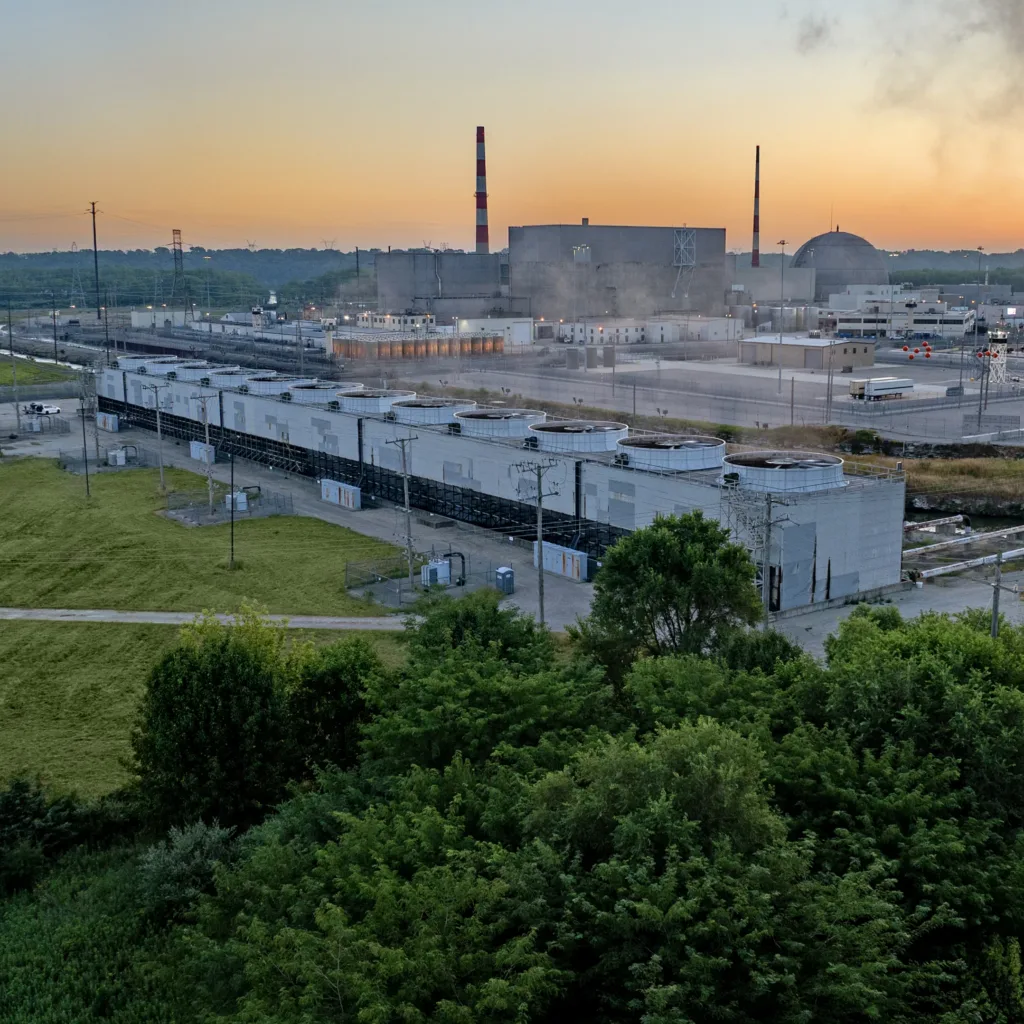
A nuclear uprate typically includes improving or replacing key equipment, such as turbines and generators, to quickly bring additional carbon emissions-free, around-the-clock power online. The nuclear plant already has a grid connection, a license, and a workforce, which avoids new siting and multi-year permitting processes. Thus, nuclear uprates are among the fastest ways to add clean firm electrons this decade.
Nuclear’s high capacity factor also means each megawatt produces more energy than other clean technologies. Using average capacity factors from 2025, the 1.6 GW of uprates CEBA has tracked this year could generate almost 13 TWh per year, as much as roughly 4 GW of wind or 6 GW of solar.
However, opportunities are limited. Only 31 of the 94 U.S. reactors expect to file for an uprate through 2032, adding about 2.4 GW combined. Notably, corporate buyers have already sent a clear demand signal. The Nuclear Regulatory Commission identifies 17 of these reactors by name, and eight of those are confirmed to be tied to corporate agreements.
Building on Momentum
These deals reflect a recent trend among some buyers to incorporate nuclear and other clean firm resources into their procurement strategies. In 2025, nuclear overtook wind to become the second-largest technology procured by corporate buyers, following solar, with more than 5 GW of capacity announced in a single year. CEBA’s Deal Tracker shows the trend continuing: Buyers have announced almost 23 GW of new clean energy capacity through the third quarter of 2026, including 2.6 GW of nuclear.
Restarts, relicensing, uprates, and new utility tariffs show buyers moving beyond standard procurement to find new ways to decarbonize the grid. CEBA applauds the organizations leading this work.
Uprates and restarts serve to squeeze more resources out of existing plants. However, meeting rising demand will also take new nuclear and other clean firm resources, and policy can help sustain this momentum. The recently introduced Bipartisan American Affordability and Jobs Act would ensure technology-neutral permitting and permit certainty across energy projects, helping bring more clean and clean firm resources, including nuclear projects, online faster.
Methodology: “New” capacity counts only megawatts added by uprates. Some deals shown buy output from existing plants and are not counted as new capacity in the CEBA Deal Tracker. The Google–Georgia Power capacity is approximate. Generation estimates use 2025 U.S. average capacity factors from the U.S. Energy Information Administration’s Electric Power Monthly (Table 6.7.B): 91.0% for nuclear, 34.2% for wind and 24.4% for solar photovoltaic. Annual generation is calculated as capacity × 8,760 hours × capacity factor. Wind and solar equivalents show the capacity needed to produce the same annual energy. Figures are illustrative and rounded.