For the first time in decades, electricity demand is on the rise across the U.S., requiring new solutions to expand generation and update our aging grid to ensure it can drive our economy and compete in the global technology race. Corporate energy buyers are innovating in real time to meet this moment.
CEBA members — comprising over $40 trillion in market capitalization — are responsible for the majority of the 130 GW of corporate carbon emissions-free energy procurement in the U.S. over the past twelve years. Voluntary corporate clean energy procurement is a key driver and financial enabler to developing a carbon emissions-free electricity system. Increasingly, CEBA members are going above and beyond clean energy procurement and working on innovative pathways to enhance the grid and bring low-cost, reliable power online.
There are three core approaches to this work:
- Collaborating With Utilities to Bring New Generation Online
- Improving and Extending the Life of Carbon Emissions-Free Energy Projects
- Driving Efficiency and Flexibility Across Operations and the Grid
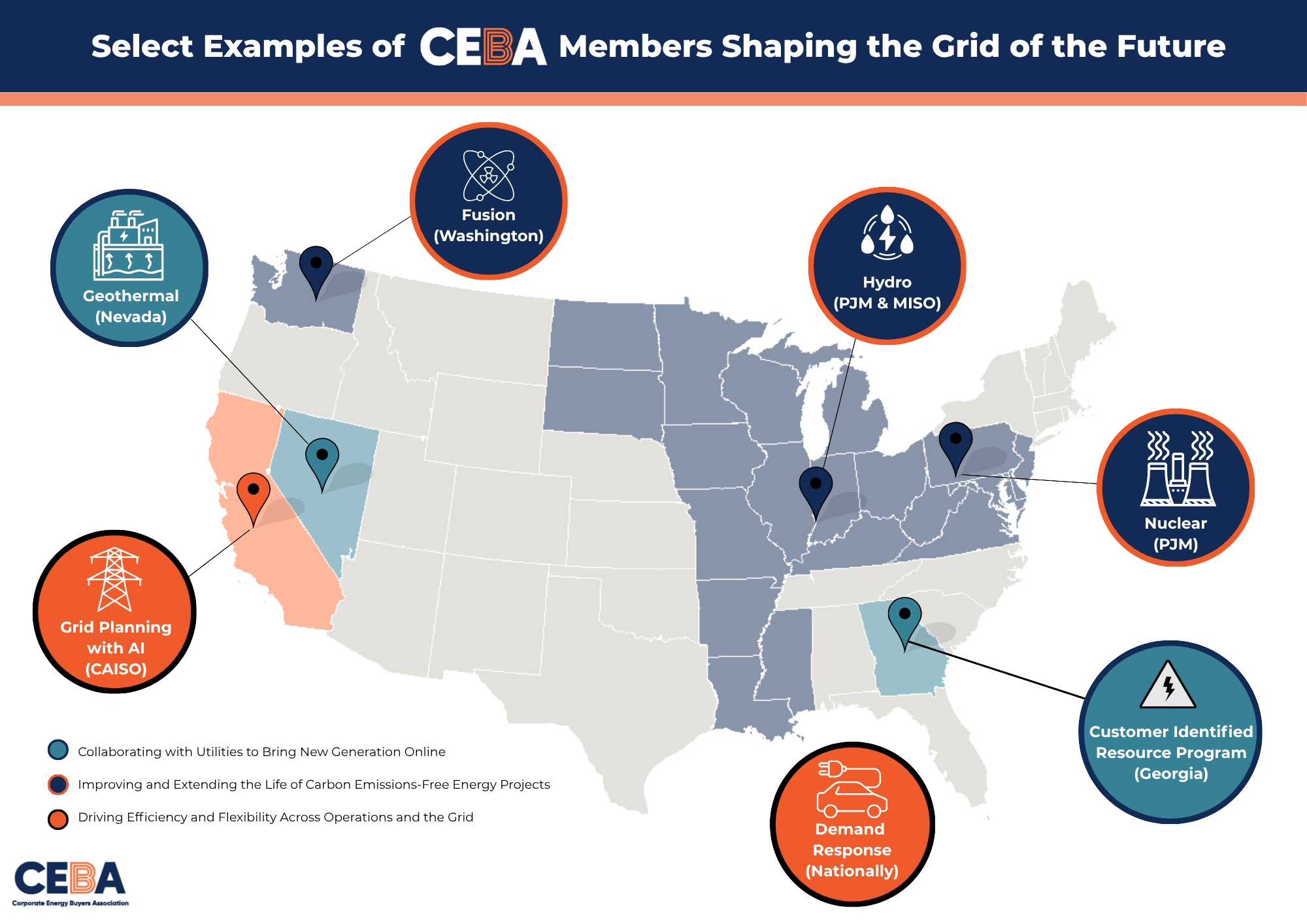
Together, these examples underscore a clear trend: energy buyers are not waiting to act. They are actively investing in solutions that enable infrastructure and generation to scale. The map below highlights some examples of these approaches in action across the country.
While data centers represent a significant share of new load today, the models and deal structures highlighted here can be applied across industries and regions.
1. Collaborating With Utilities to Bring New Generation Online
What:
To support system planning to address load growth, CEBA and our members are working with utilities on methods to bring additional carbon emissions-free generation online. Often, this is through existing regulated pathways and includes developing new energy tariff structures to better address the costs of new generation and associated grid infrastructure.
An energy tariff is the pricing structure that defines how an energy buyer is charged for electricity (or sometimes gas) by a utility or energy supplier.
CEBA sees tariff innovation as one of the most impactful — and underrecognized — grid breakthroughs of the past decade, and a key lever for engaging large electricity buyers, if designed and implemented effectively. Therefore, CEBA is developing a tariff report to be released later this spring, which will highlight proposed and approved tariffs, as well as innovative bilateral agreements that have helped to bring carbon emissions-free generation to the system.
Why It Matters:
These tariffs show that large energy buyers can accelerate carbon emissions-free energy deployment, improve system reliability, and reduce long‑term system costs, while shielding other ratepayers from cost shifts. These collaborations enable buyers to contribute innovative solutions, partnering to operate within utility planning processes rather than outside of them.
Examples:
- Georgia’s Customer Identified Resource Program could add up to 3 gigawatts (GW) of new generation in the state by allowing buyers to bring their own new carbon emissions-free energy projects to the system. This program was developed with input from CEBA and our members, including hyperscalers, retail, and manufacturing companies.
- Buyers working directly with utilities to create new tariff structures:
- Google has been working with utilities on tariffs to enable large energy buyers to bring carbon emissions-free resources to the system. Examples such as Nevada’s Clean Transition Tariff and the Clean Energy Accelerator Charge in Minnesota and Michigan help ensure integration of new generation into utility planning processes, establishing alignment with system needs, while avoiding cost shifts to other customers on the system.
- Microsoft is working with local utilities and regulators to ensure the tariffs charged to its data centers are sufficient to cover not only the energy used, but also the infrastructure required to support its facilities. Early efforts with utilities in Wisconsin and Wyoming have led to new rate structures and investments in local communities.
2. Improving and Extending the Life of Carbon Emissions‑Free Energy Projects
What:
CEBA members are investing across a broader mix of technologies, including restarting existing assets, advancing pre-commercial and emerging technologies, and executing long‑term framework agreements for carbon emissions-free power. Most of these investments have been through power purchase agreements (PPAs), which offer energy developers a steady revenue stream, enabling them to attract the capital required for construction of the projects.
Why It Matters:
Restarting existing assets can reduce costs and accelerate access to grid-connected capacity — an increasingly critical advantage as demand growth outpaces new project development timelines. This is an especially critical strategy for nuclear plants that require new capital to support license extensions, upgrades, and uprates.
By investing early in next‑generation and first‑of‑a‑kind technologies, corporate buyers help de‑risk projects, demonstrate commercial viability, and drive down costs over time. These investments also send a strong demand signal for a wider set of technologies, supporting the build of new energy infrastructure and strengthening grid reliability.
Examples:
- Long‑term framework agreements to deploy gigawatts of carbon emissions‑free energy, such as Microsoft’s first-of-its-kind global framework and Google’s hydroelectricity framework for up to 3 GW of hydropower from relicensed, overhauled, or upgraded facilities — the largest of its kind to date.
- Investments in next‑generation fusion projects including a 200MW agreement by Google with Commonwealth Fusion Systems in PJM and a 50MW agreement by Microsoft with Helion in the Northwest.
- Partnerships supporting nuclear restarts and preservation. Over 7 GW of capacity announced across 11 deals, including Meta’s recent announcement of the largest nuclear uprates supported by a corporate buyer in the U.S.
- Expanding low‑impact hydropower capacity without new dams or major ecological disruption, as demonstrated by Digital Realty’s projects in West Virginia and Ohio.
3. Driving Efficiency and Flexibility Across Operations and the Grid
What:
The demands on the U.S. energy grid are now growing significantly, introducing new challenges that the system cannot withstand in its current state. Corporate electricity buyers are contributing to grid solutions by offering load flexibility, when and where possible, and supporting additional efficiency and grid optimization measures, such as demand-side management programs and advanced transmission technologies (ATTs).
Why It Matters:
In addition to building new transmission lines, reducing overall system demand and making better use of existing infrastructure is an important and cost-effective near-term solution. Advanced transmission technologies, such as grid enhancing technologies (GETs) or high performance conductors (HPCs), can increase the capacity of existing transmission infrastructure while avoiding the need for extensive new permitting and siting approvals. In addition, investing in existing utility programs to expand energy efficiency and demand-side management measures and storage can better leverage and optimize existing system assets.
Examples:
- Partnering with utilities and other stakeholders on managed EV charging and demand response, such as General Motors’ recent efforts. Utilize Coalition also launched a national, industry-led campaign working to increase grid utilization. CEBA and its members are involved with this coalition.
- Investing in existing utility programs, such as Google’s $50 million investment in Xcel Energy’s Capacity*Connection Program, to expand battery storage in Minnesota.
- Using AI to modernize grid planning, as planned by Microsoft in partnership with MISO and NVIDIA in Southern California.
- Funding grid infrastructure upgrades tied to large loads — including on‑site generation, transmission, storage, and substations — to avoid cost‑shifting to ratepayers, as demonstrated by Oracle.
- Advocating for GETs and HPCs, as Amazon has done through its partnership with RMI and Google with CTC Global.
Have additional examples to share? We’d love to hear from you at communications@ceba.org